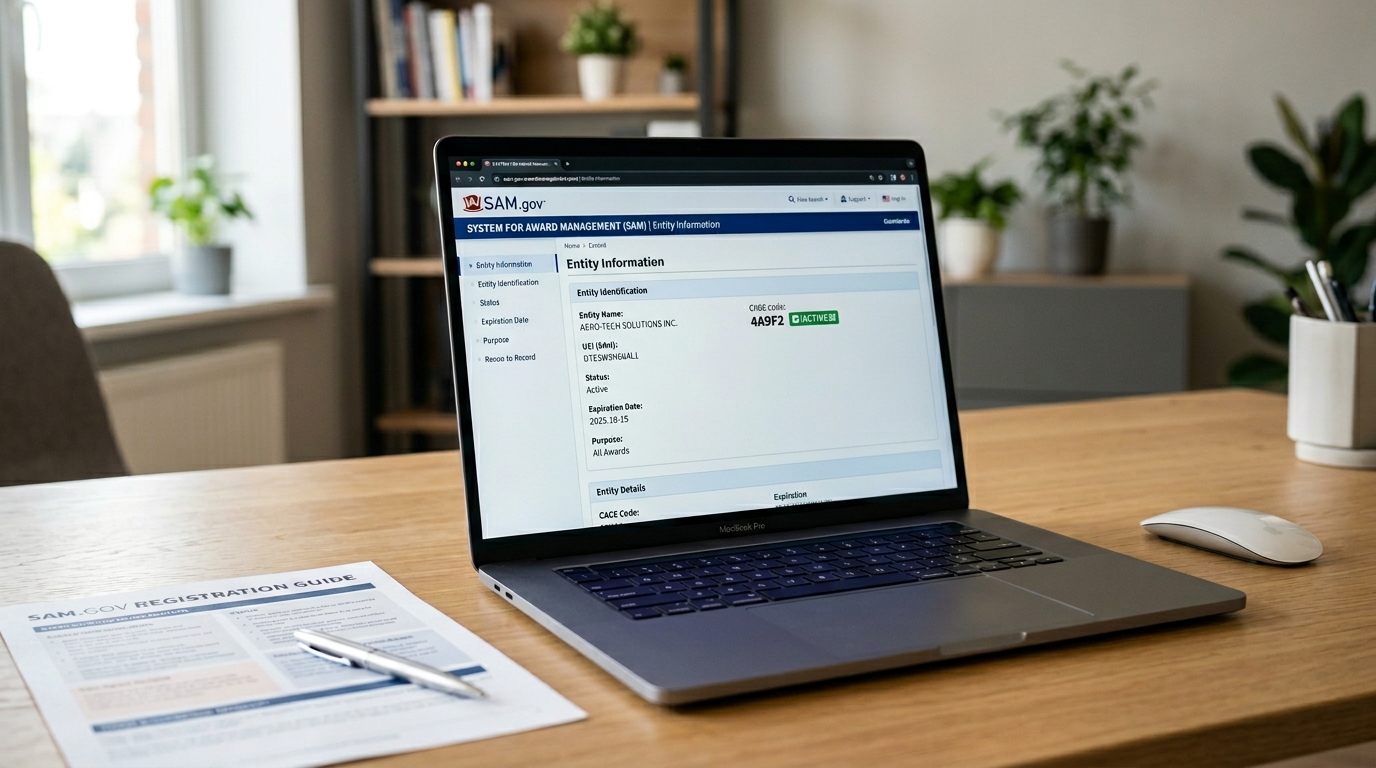
A CAGE code (Commercial and Government Entity code) is a 5-character alphanumeric identifier assigned to vendors doing business with the U.S. federal government. This guide explains what a CAGE code is, how it differs from your UEI, how it gets assigned through SAM.gov, and what to do if you need to locate or verify yours.
For the full SAM.gov reference guide covering UEI, CAGE code, entity validation, and renewal, see the SAM.gov registration guide for small businesses.
On this page Jump to section
What Is a CAGE Code?
A CAGE code (Commercial and Government Entity code) is a 5-character alphanumeric identifier assigned by the Defense Logistics Agency (DLA) to entities that do business with the U.S. federal government. CAGE codes are used across the federal acquisition system to identify vendors in procurement records, contracts, and payment systems.
For U.S.-based businesses, a CAGE code is assigned automatically when you complete entity registration in SAM.gov — you do not need to request it separately. Once assigned, your CAGE code is tied to your physical business address and does not change unless your address changes significantly.
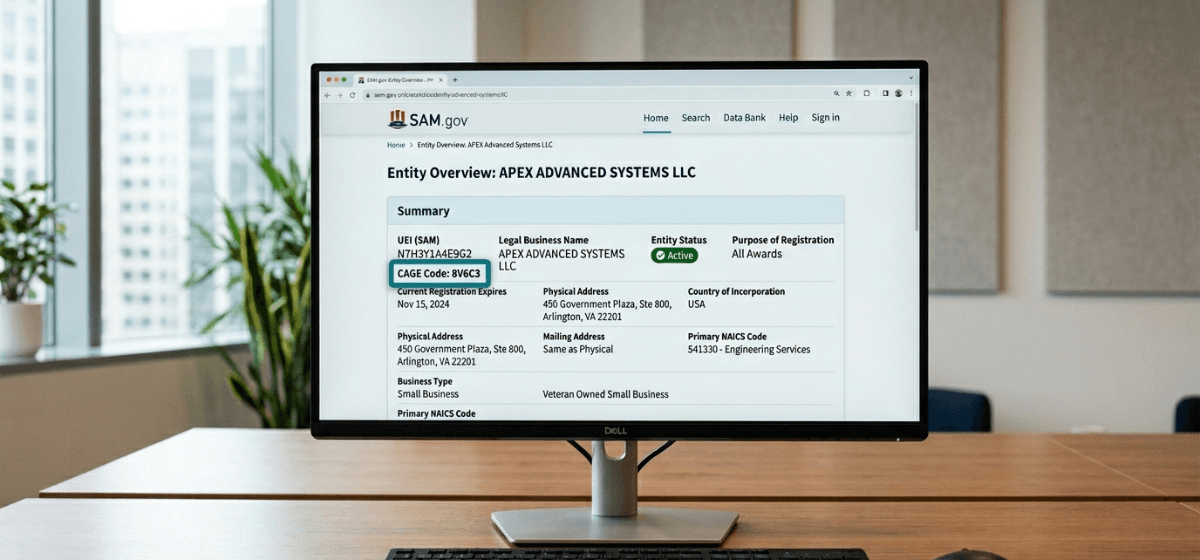
CAGE Code vs UEI: What's the Difference?
Both identifiers appear in your SAM.gov entity record, and both are used across federal procurement — but they serve different purposes and come from different systems.
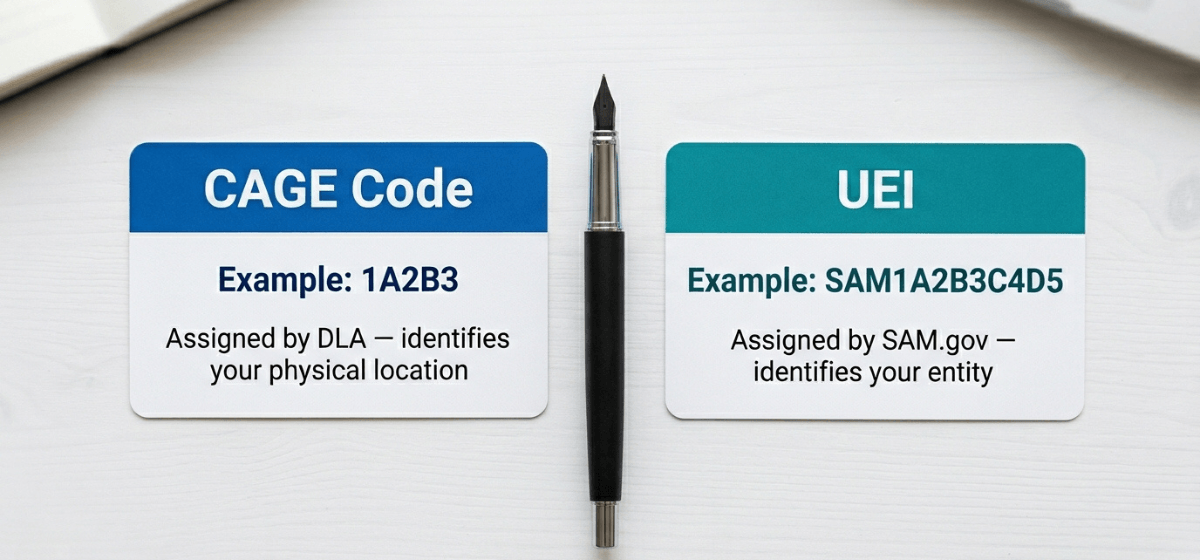
5 characters. Assigned by the Defense Logistics Agency (DLA). Tied to your physical business address. Used to identify your entity in procurement and payment records across defense and civilian agencies.
12 characters. Assigned by SAM.gov. Replaced the DUNS number in April 2022. Used as the primary identifier for all federal awards, grants, and registrations.
How a CAGE Code Is Assigned
For U.S.-based entities, the CAGE code assignment process is automatic and happens as part of SAM.gov registration. You do not submit a separate application. Here is what happens behind the scenes:
SAM.gov validates your submitted information against official sources — IRS records, state business registrations, and other federal databases.
The DLA maintains the CAGE registry and is responsible for assigning codes to U.S. entities. This happens automatically — no separate DLA application is required for domestic businesses.
Log into SAM.gov, navigate to your entity record, and look for the CAGE Code field in the entity summary panel. Document it in your vendor file — you will need it for contracting and payment paperwork.
NCAGE Codes for Non-U.S. Entities
If your business is located outside the United States and you need to do business with the U.S. federal government, you will need an NCAGE code (NATO Commercial and Government Entity code) rather than a standard CAGE code.
- NCAGE codes are requested through the NATO Support and Procurement Agency (NSPA) — not through SAM.gov directly.
- The process and timeline differ from domestic CAGE assignment — plan for additional lead time.
- Once your NCAGE is assigned, you can proceed with SAM.gov registration using that code.
- If you are a U.S.-based entity with international locations, each physical address may have its own CAGE/NCAGE code.
Where to Find Your CAGE Code
Your CAGE code is visible in multiple places once your SAM.gov registration is active:
- SAM.gov entity record: Log in, go to your workspace, open your entity record. The CAGE code appears in the entity summary panel near the top of the page alongside your UEI.
- SAM.gov public search: Anyone can search for an entity on SAM.gov using the entity name or UEI. The CAGE code appears in the public entity record.
- Contract and award documents: If you have received a federal award, your CAGE code will appear on the award document.
- CAGE/NCAGE lookup tool: The DLA maintains a public CAGE code search tool at cage.dla.mil where you can look up any entity by name, UEI, or CAGE code.
Common CAGE Code Questions
Does my CAGE code expire?
A CAGE code itself does not expire. However, your SAM.gov registration expires annually. If your registration lapses and becomes inactive, your CAGE code remains on file but your entity is no longer eligible to receive federal awards until registration is renewed and active again.
Can my CAGE code change?
Your CAGE code is tied to your physical business address. If your address changes significantly — particularly if you relocate to a different state — the DLA may assign a new CAGE code. Minor address formatting updates typically do not trigger a new code. If you are uncertain, verify with the Federal Service Desk before making changes.
What if I have multiple locations?
Each distinct physical business location can have its own CAGE code. If your business operates from multiple addresses and you register each separately in SAM.gov, each registration may receive its own CAGE code. For most small businesses with a single location, this is not a concern.
Do I need a CAGE code to bid on contracts?
Yes — indirectly. A CAGE code is assigned as part of active SAM.gov registration, and an active SAM.gov registration is required to be awarded a federal contract. You cannot bid and receive an award without an active registration, which means you will have a CAGE code by the time you are eligible to receive one.
Need help getting your SAM registration right the first time?
CAGE code assignment, entity validation, and UEI confirmation all happen through a single SAM.gov registration workflow. If you want a done-for-you approach that handles the details correctly from the start, book a strategy call or see our registration service.
Frequently Asked Questions About CAGE Codes
What does CAGE stand for?
CAGE stands for Commercial and Government Entity. It is a standardized identification code used across U.S. federal procurement systems.
Who assigns CAGE codes?
The Defense Logistics Agency (DLA) assigns CAGE codes to U.S.-based entities as part of the SAM.gov registration process. For non-U.S. entities, NCAGE codes are assigned through the NATO Support and Procurement Agency (NSPA).
Is a CAGE code the same as a UEI?
No. A CAGE code is 5 characters and is assigned by the DLA, tied to your physical address. A UEI is 12 characters and is assigned by SAM.gov as your primary federal award identifier. Both appear in your SAM.gov entity record.
Do I need to pay to get a CAGE code?
No. CAGE code assignment is part of the free SAM.gov registration process. SAM.gov is a free government system. Any service charging a fee specifically for CAGE code assignment is not required.
How long does it take to get a CAGE code?
CAGE code assignment happens during SAM.gov entity validation and registration processing. The overall SAM.gov registration timeline is typically 7–10 business days for clean registrations, though it can take longer if there are validation issues.