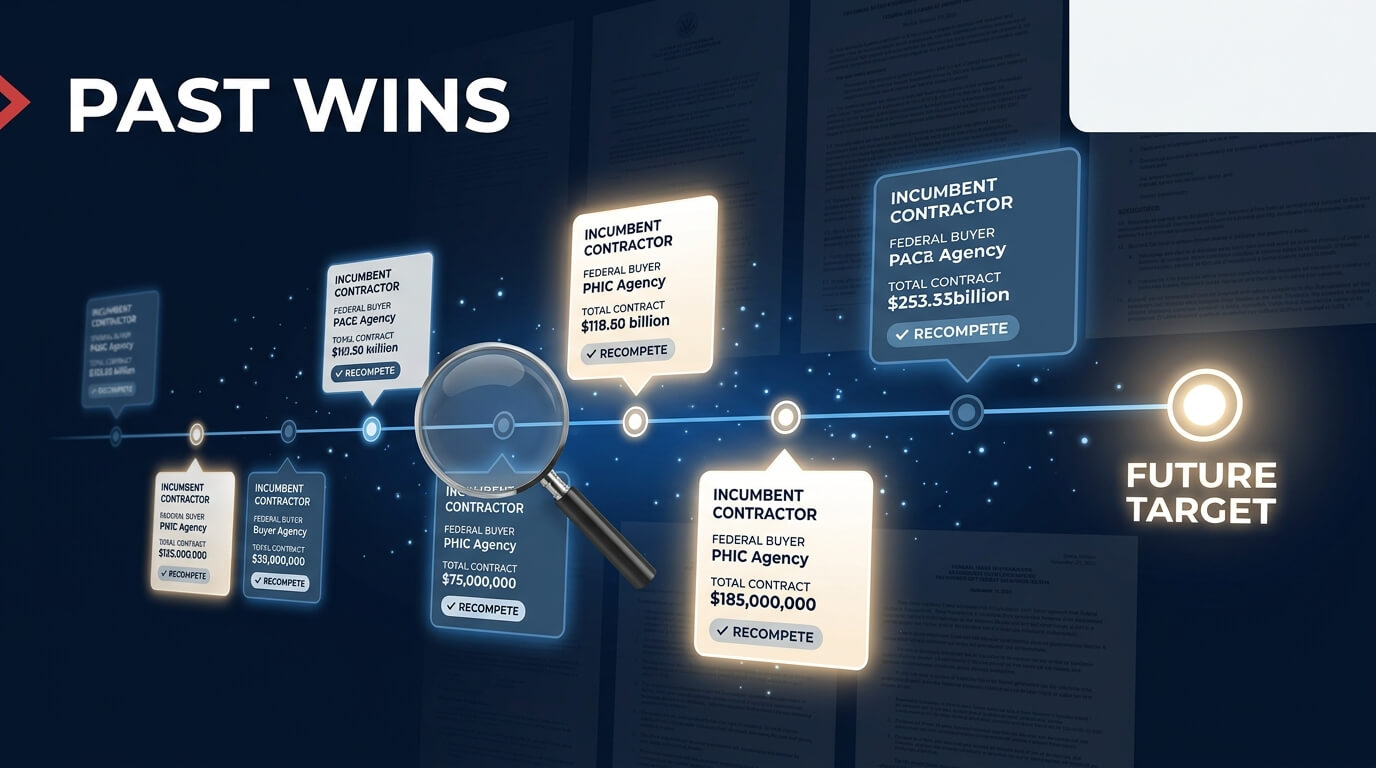
Finding Contract Opportunities · Award Intelligence
Past contract awards are a public record of exactly what the government buys, from whom, and for how much. Learning to read that record turns discovery from guesswork into targeting — here is where it lives and how to use it.
Federal contract award history now lives primarily on SAM.gov, which became the authoritative source for individual award records after FPDS.gov retired in February 2026. USAspending.gov is a second, account-free source for government-wide spending trends. Award history reveals who buys your services, how much they spend, who the incumbent is, and when contracts recompete — use it to target agencies and time your outreach.
On this page Jump to section
Why Past Awards Predict Future Opportunities
The federal government is a creature of habit. Agencies buy the same categories of goods and services year after year, and most contracts eventually expire and get re-competed. That makes contract award history one of the most useful discovery tools available: it shows you who buys what you sell, how much they spend, who currently holds the work, and roughly when it will come up again. You are not guessing at demand — you are reading a public record of it.
Where Award Data Lives Now
This is where a lot of older guidance is now wrong. For years, the go-to source for detailed contract-award data was FPDS.gov, the Federal Procurement Data System. FPDS was retired in February 2026, and its public contract-award search was consolidated into SAM.gov. Today there are two primary sources you should use:
SAM.gov
The authoritative source for individual federal contract-award records after the FPDS transition.
Free account requiredUSAspending.gov
Government-wide spending data for trends, top vendors, and agency-level analysis. See our USAspending.gov research guide.
No account requiredWhat Award History Reveals
A single award record is a small intelligence report. Read across many of them and patterns emerge:
Who Buys
Which agencies and sub-offices purchase your NAICS or PSC, and how often.
How Much
Typical dollar values, so you can gauge whether an opportunity fits your size.
Who Holds It Now
The incumbent contractor you would be competing against.
When It Recompetes
Contract end dates that indicate when the work may return to the market.
New vendors used to ask me, off the record, “who usually wins this kind of work here?” The honest answer was always: it is public — go read the award data. Everything about who won, for how much, and until when is on the record. The vendors who did that homework showed up to bids understanding the landscape; the ones who did not were guessing.
How to Turn Award History Into Action
Award data is only useful if it changes what you do. Use it to build a focused target agency list of buyers that actually purchase your services, to identify the incumbent before a recompete, and to time your outreach so you are on an agency's radar months before the solicitation posts. Combined with forecasts and Sources Sought notices, award history turns discovery from reactive searching into proactive targeting.
Want to Know Who Buys What You Sell?
We help you mine federal award data to find your best-fit buyers and time your outreach before opportunities post.
Frequently Asked Questions
Where can I find federal contract award history?
On SAM.gov, which became the authoritative source for individual contract-award records after FPDS.gov retired in February 2026, and on USAspending.gov for government-wide spending trends.
What happened to FPDS.gov?
FPDS.gov was retired in February 2026 and its public contract-award search was consolidated into SAM.gov. Older guides that point to FPDS are out of date.
Do I need an account to see award data?
A free SAM.gov account is required to view its detailed award search. USAspending.gov requires no account at all.
What can award history tell me?
Which agencies buy your services, typical contract values, who currently holds the work — the incumbent — and when contracts are likely to be re-competed.
How is award history useful before I bid?
It helps you build a target agency list, identify incumbents and competitors, gauge whether an opportunity fits your size, and time outreach ahead of a recompete.