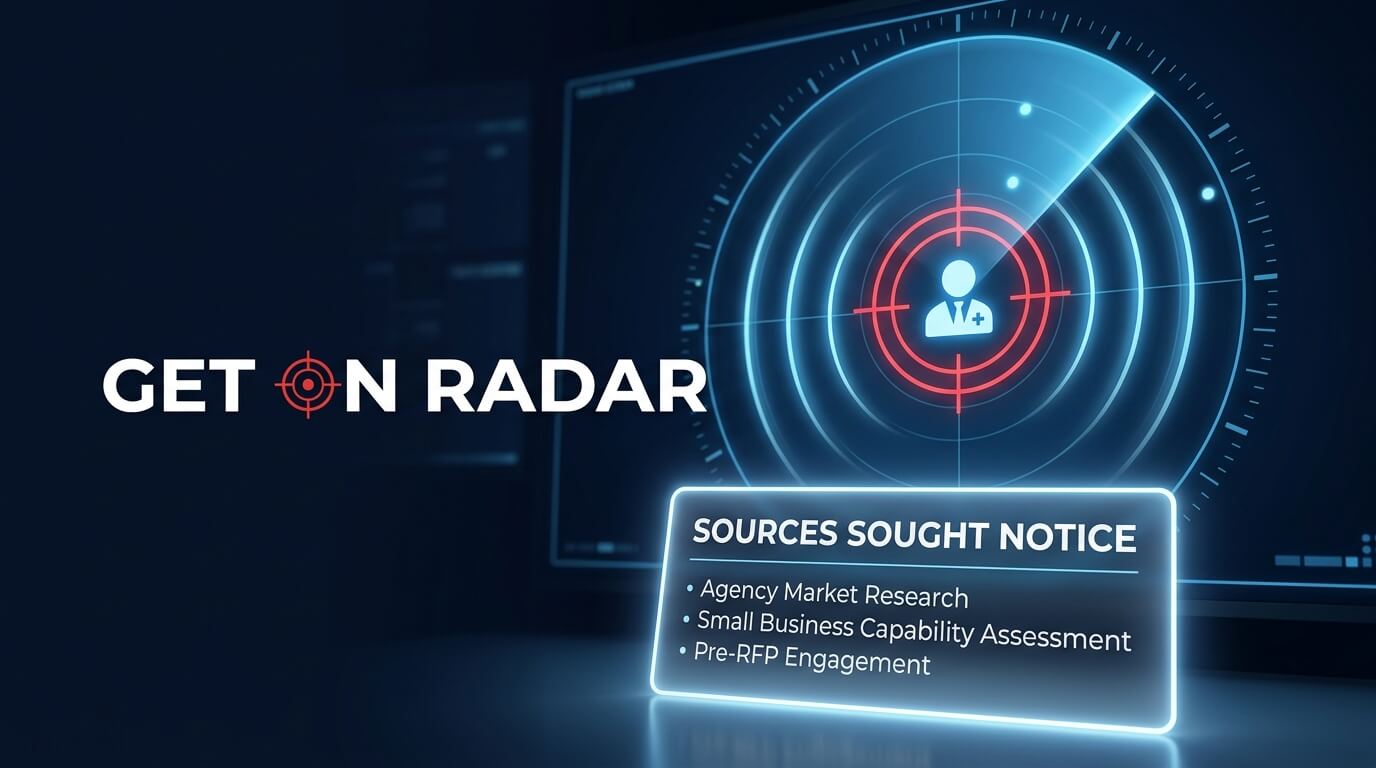
Sources sought notices are the earliest public sign that a contract is coming. They are market research, not solicitations — but used well, they put your company on an agency's radar before your competitors even know the opportunity exists.
A sources sought notice is federal market research, not a solicitation — you cannot win work directly from it, but you can get on the agency's radar early. Find them on SAM.gov by setting Notice Type to “Sources Sought” plus your NAICS code. Read for scope, size standard, and deadline, then respond with a short capability statement when the opportunity genuinely fits.
What a sources sought notice is
A sources sought notice is market research, not a solicitation. Before an agency commits to a purchase, it often posts a sources sought to ask industry: who can do this work, and are there enough capable small businesses to justify a set-aside? You cannot win a contract directly from a sources sought — but you can put your company on the agency's radar before the real competition starts. For how it fits alongside every other notice type, see RFI vs RFP vs RFQ vs sources sought.
A sources sought response is a capability statement, not a proposal or a price. It tells the agency you exist and can do the work. No award comes from it — but the solicitation that follows may be shaped by who responded.
Why they matter for discovery
Sources sought notices are one of the earliest public signals that a requirement is coming. Finding them early gives you three advantages: weeks or months of lead time before the RFP drops, insight into exactly what the agency plans to buy, and a chance to be counted when the agency decides whether to set the work aside for small business. For new vendors, that early visibility is one of the most valuable things in the entire discovery process.
How to find sources sought on SAM.gov
On the SAM.gov Contract Opportunities search, set the Notice Type filter to “Sources Sought” and add your NAICS code. That combination surfaces upcoming requirements in your industry that have not yet become solicitations. Save it as its own alert — separate from your active-solicitation searches — so early signals do not get buried. (New to filtering? Start with the filters that matter.)
How to read a sources sought notice
When you open one, look for four things: the scope of work being researched, the NAICS code and size standard the agency is considering, any capability questions they want answered, and the response deadline. Together these tell you what the agency is planning, whether you would qualify as a small business for it, and how much runway you have before a solicitation appears.
When I issued a sources sought as a contracting officer, the responses genuinely influenced my acquisition strategy. If several capable small businesses replied, that supported setting the work aside for small business. If only large firms answered, it often went full-and-open. Companies that stayed silent simply were not part of that conversation — and had no influence over the terms they would later have to compete under.
Deciding whether to respond
Not every sources sought deserves a response. Prioritize the ones where the scope is squarely in your wheelhouse, you clearly meet the size standard, and the potential contract is worth pursuing. A short, on-point capability statement that answers the agency's specific questions is the goal — volume is not.
Writing a response that actually shapes the set-aside decision in your favor is its own discipline, and we cover that positioning work separately. For discovery purposes, the key move is simpler: find the notices early, read them closely, and use them to decide which opportunities to start tracking in your pipeline.
Want help spotting the right opportunities early?
We help you set up sources sought alerts and decide which ones are worth responding to — so you get on the radar before the RFP drops. Book a free strategy call.
Book a Free Strategy Call →Frequently Asked Questions